THRESHOLD
 See
SeeThis series follows in the footsteps of Schmates. The bodies hesitate on the threshold, about to enter, retreat, or disappear.
-Work on canvas with India ink, engraving ink and pigments.
TRACES
 Voir tout
This series follows in the footsteps of Schmates and Seuil. The forms fade even further, leaving only a faint imprint of bodies on the canvas.
Work on canvas with India ink, engraving ink and pigments.
Nadine Kohn-Fiszel
Artiste plasticienne
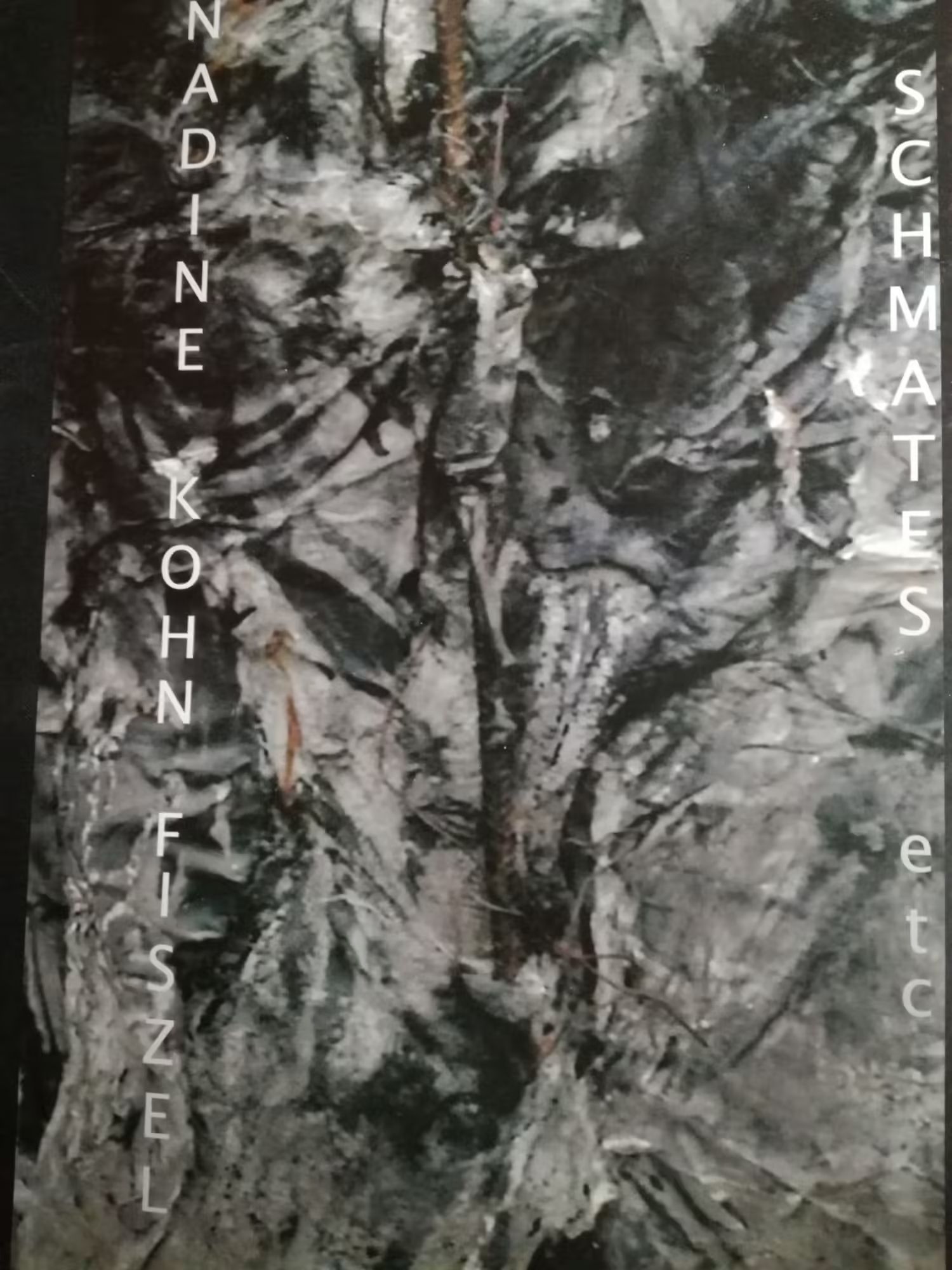
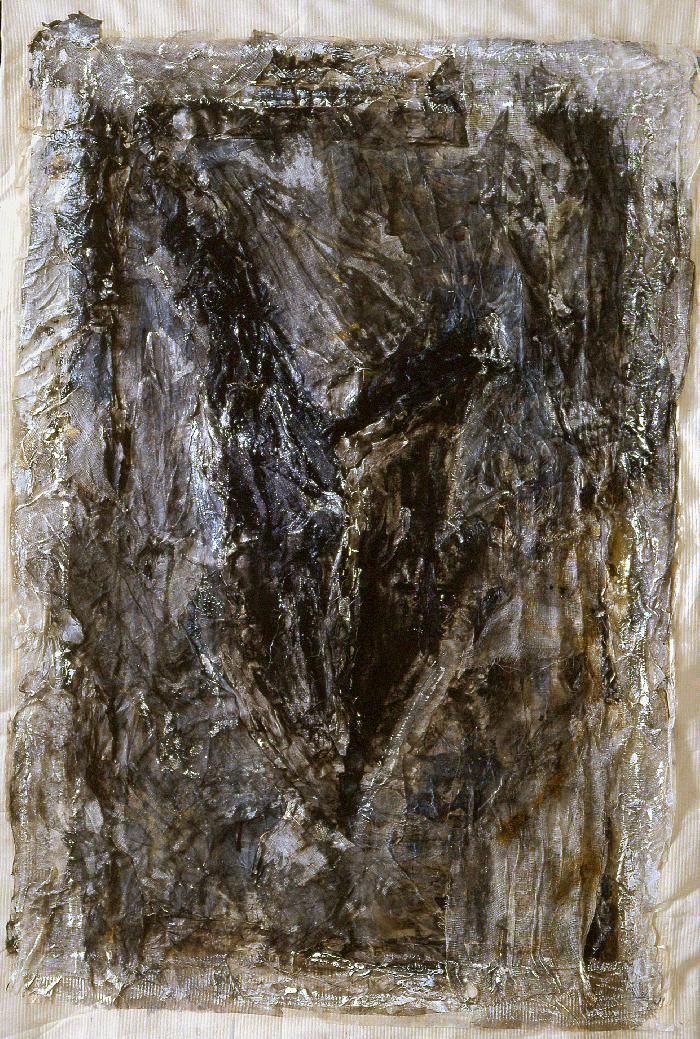
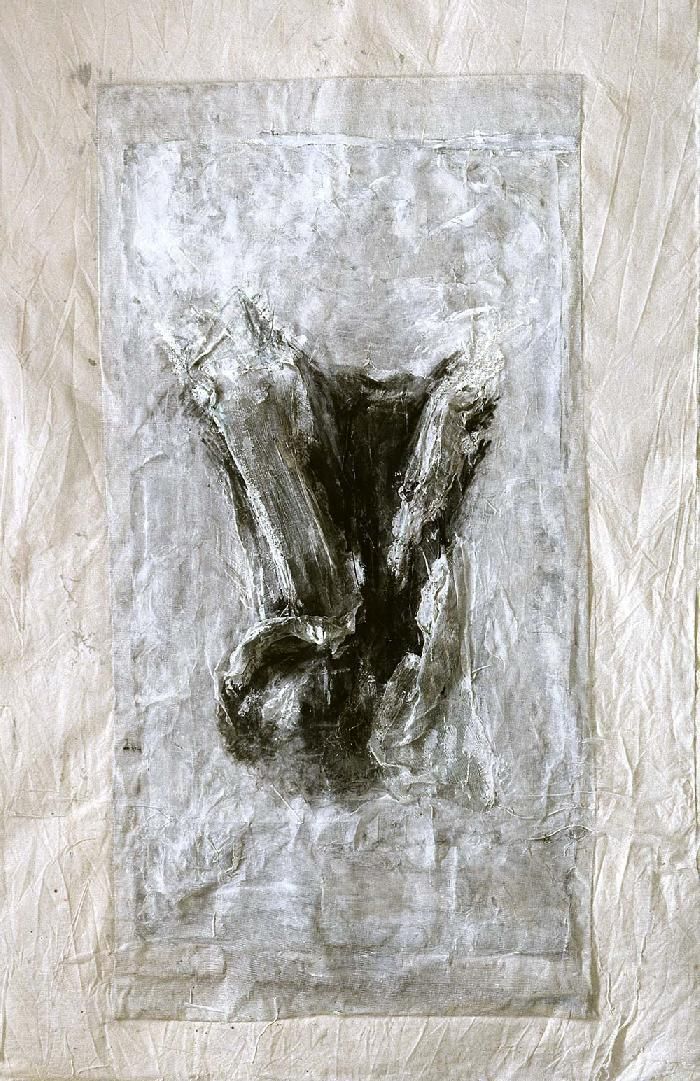
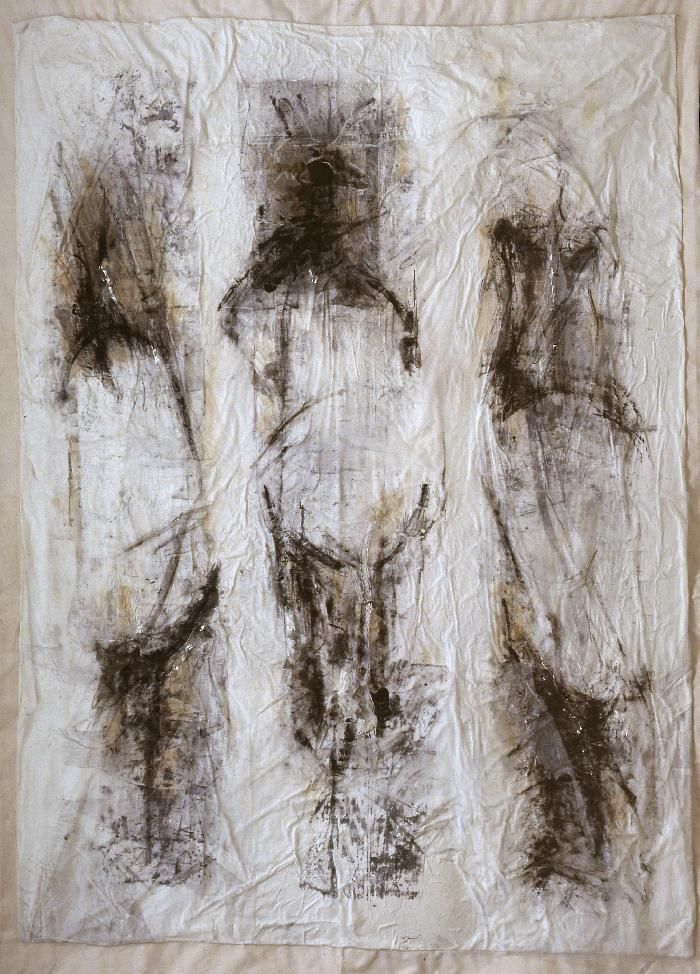
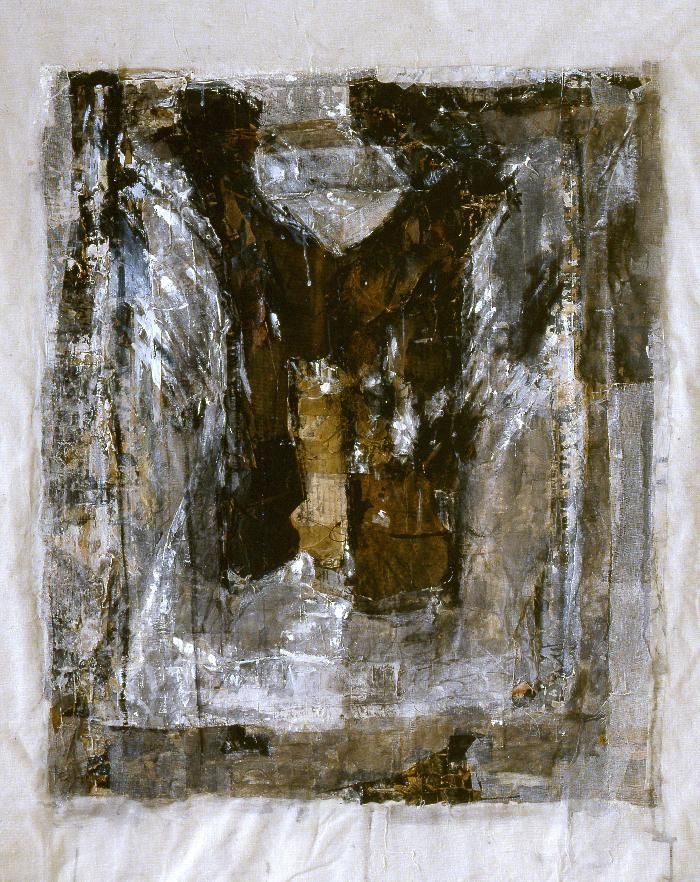
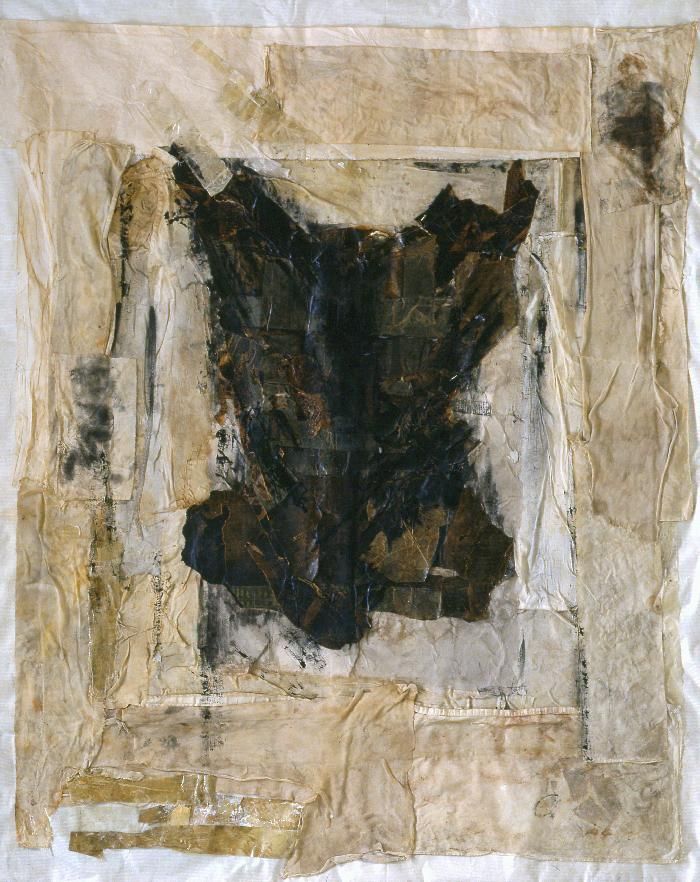
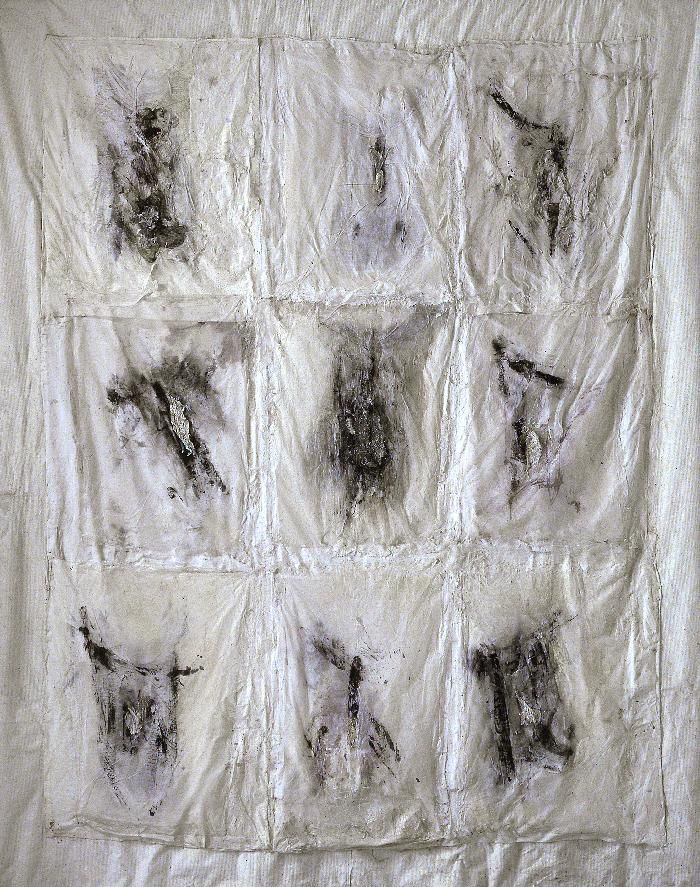
SHCMATES
Collection: An Approach to the Body — 2003 Series
1998-2003
A series that reflects on the concept of the trace,
the passage of a body viewed from behind,
in conjunction with a reflection on used fabric,
the tear and the discard.
Gallery
Click on an image to view the slideshow









Texts, exhibitions and publications
Les Tombants
Nadia Blumenfeld
Hanged. Their bodies no longer respond to the breath of the wind.
Stretched, the torsos are not soothed.
At first glance, one is captivated and unsettled by the violence emanating from this body, this artwork. The artwork becomes one with the body, and the body gave birth to this work. The materials, for these are relief sculptures poised between heaven and earth...
READ MORE
or, between sculpture and bas-reliefs, fall under the category of poor art.
Sheet, lace, Japanese paper, ink, wire, wax, fabrics.
The gaze is enveloped in this sheet, caught as if by a second skin, by a shroud.
We think of imprints, we immediately sense the many layers that have nestled in the imprint, in the initial proposition: we see black and white, but the absence of color is only appearance and it is also in the depth.
Often a work of art is ostentatious and on display, but here we are presented with the opposite proposition. The work itself is withdrawn, it advances masked; we can see in this an inversion, a withdrawal into itself: the world can be created outside.
Folds, inks, traces, photos cannot reproduce the full depth of the proposal: We also think about printing, about texts.
Because of their very fact of being hung without a frame, which makes them called the falling ones, there is a negation of the fixed, hung, framed, embedded, calibrated "work" with pictorial or sculptural specificity.
The materials and forms destabilize, challenge, and create the desire and the need to delve deeper into this open and embodied art.
Above the cliff, in the open wind, you can see the sea crashing against the rocks and rare bushes clinging to the rocky side twisting in the space.
One can then imagine at once a bird flying, taking support from the air close to the rock, and one has the external vision, and suddenly see a fault in that drop-off and enter it, consent to be absorbed, and calm prevails, the wind falls back, the red glow of the center of the earth appears.
I am thinking of this text by Hans Jonas in "The Concept of God after Auschwitz". "Tsimtsoum" means contraction, withdrawal, self-limitation.
To make room for the world, the En-Sof of the beginning, the infinite, had to contract within itself and thus allow the void, the nothingness, to arise outside itself, within which and from which it could create the world. Without its withdrawal into itself, nothing else could exist outside of God, and only its enduring restraint preserves finite things from a further loss of their own being in the divine "all in all."
MEMORY LANE Exhibition
Guangzhou, China, July 2012


Livre SCHMATES
Nadine KOHN-FISZEL