


SCHMATES
See1998- 2003
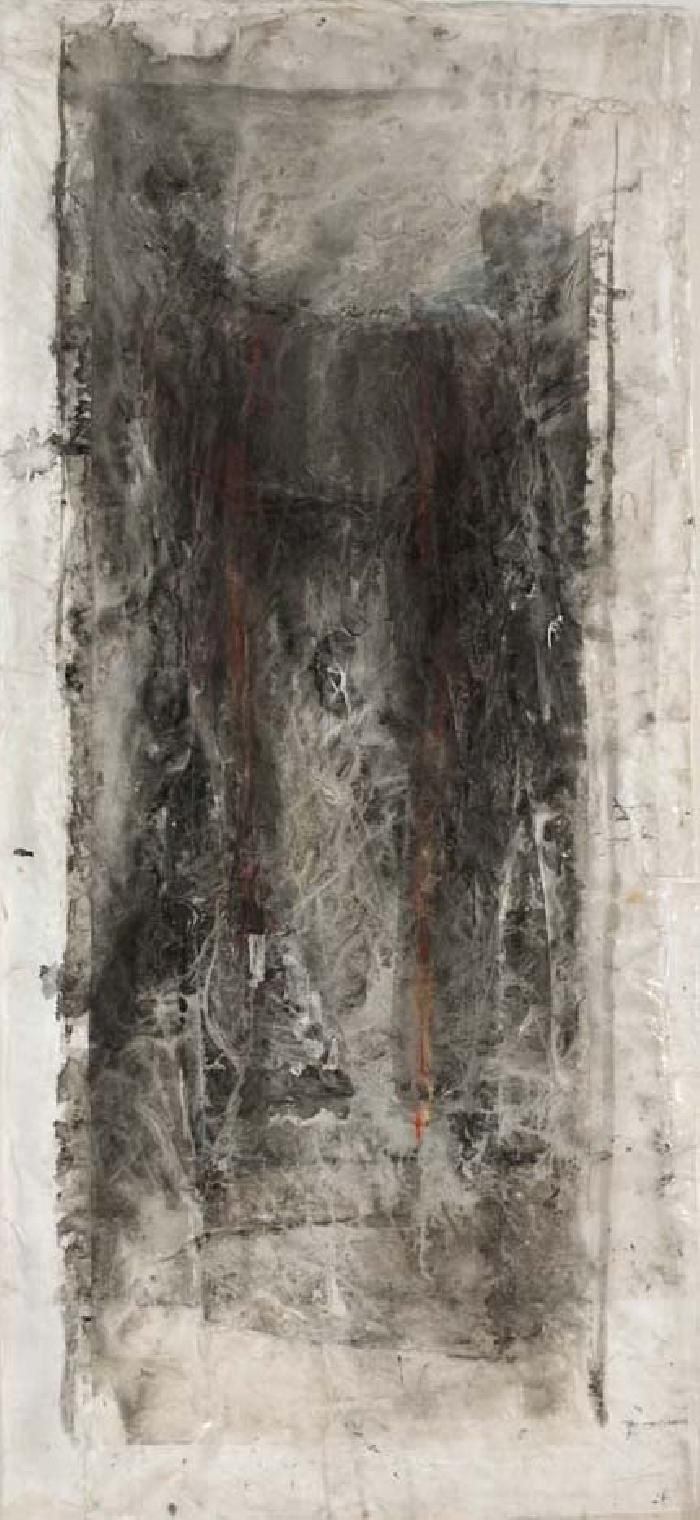
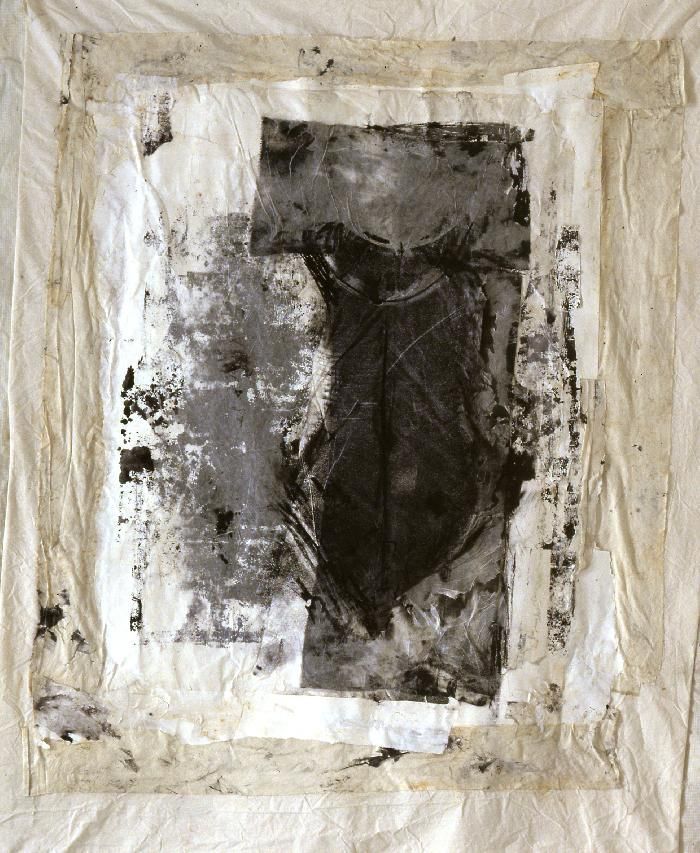
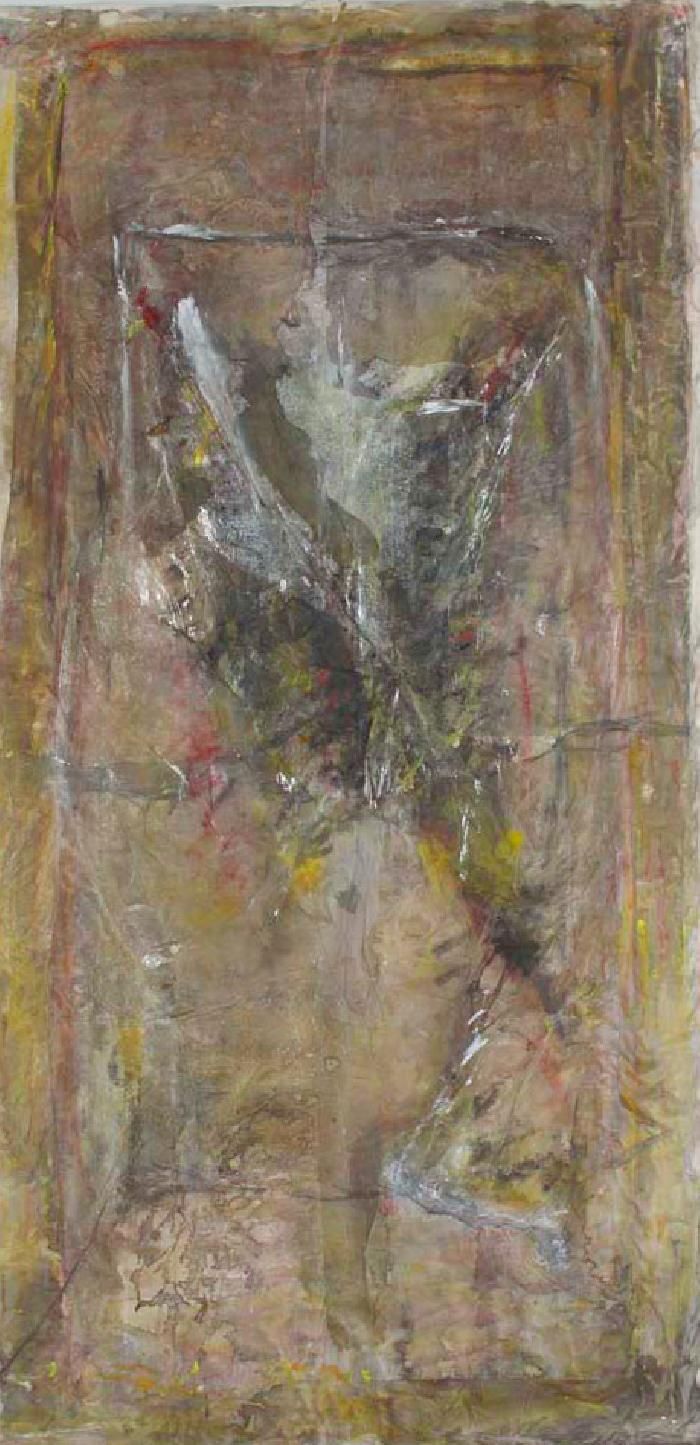
This series is based on a reflection on the trace, the passage of a body seen from behind, in conjunction with a reflection on used fabric, tearing and waste.
TRACES
SeeA series that follows in the footsteps of Schmates and Seuil.
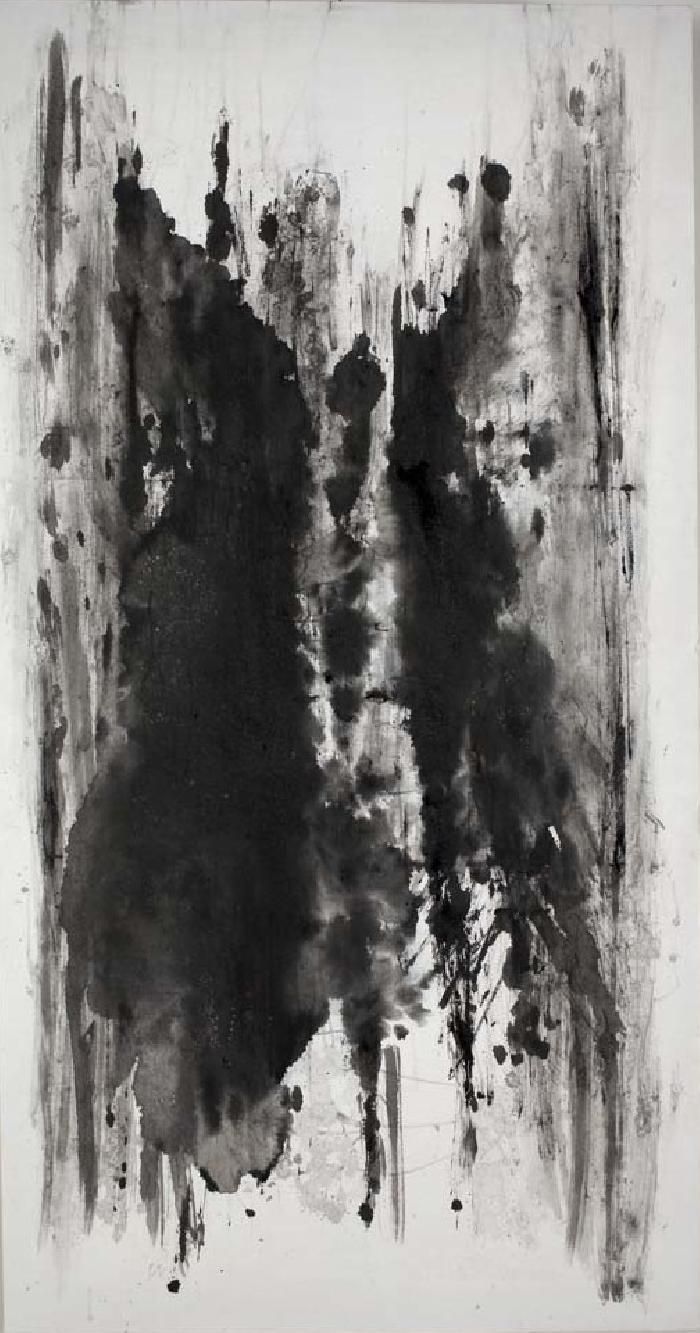
The forms fade even further, leaving only a faint imprint of the bodies on the canvas.
Work on canvas with India ink, engraving ink and pigments.
Nadine Kohn-Fiszel
Artiste plasticienne
THRESHOLD
Collection: An Approach to the Body — 2013 Series
A series that follows in the footsteps of Schmates.
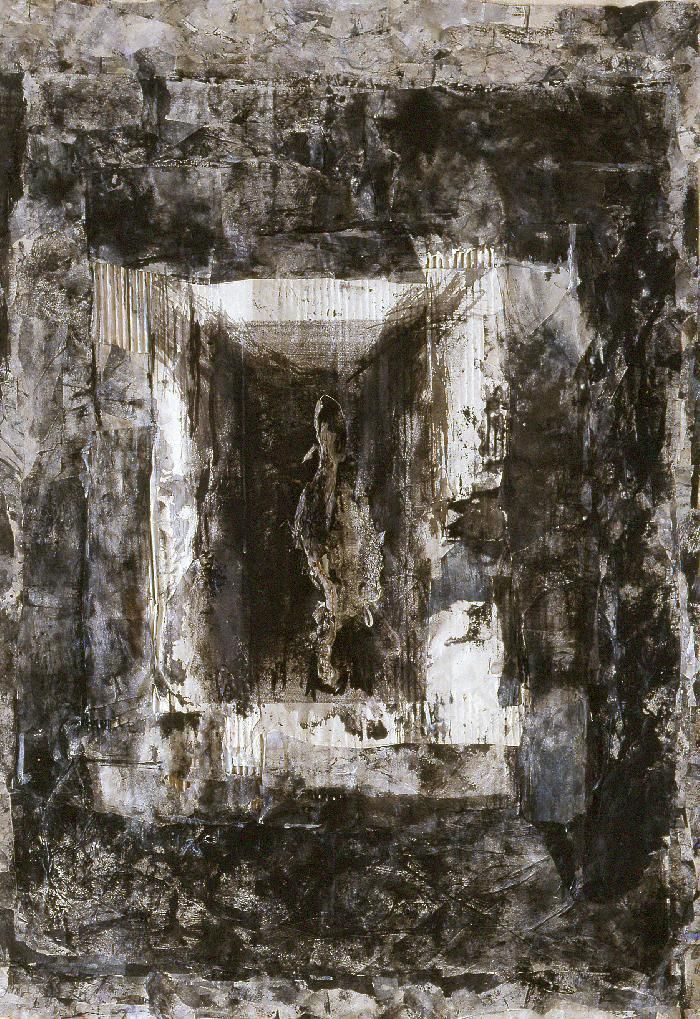
The bodies hesitate on the threshold
to penetrate, retreat or disappear.
Work on canvas with India ink,
engraving ink and pigments.
Gallery
Click on an image to view the slideshow








Linceuil
Catherine IFERGAN
Suspended, heavy, sometimes animated by very slow waves that multiply the movement of the hanging bars, these sheets reflect in their weight the gravity of the bodies they evoke.
Imprints, negatives of bodies, torsos...
READ MORE
without legs, without arms, without a head, without sex or almost.
Still a body, we recognize the torso, the attachment of a shoulder, the curve of a hip.
Evoking ancient embalming, burials in foreign lands, inhumations without tombs, bodies without sepulchers, blackened, burned carcasses, the forms respond to each other from work to work, emerging from the sheets, by force of superimposition, or penetrating, turning their backs on the spectator, into a flat and supple world, dark and pale, rough and soft.
Faceless shrouds, are they of ancient dead, of memory of the dead or of the living, doubled, glued, torn, patched, sustained at the limit of a past and a present, of a present and a future?
A shadow on the picture
Veronique TRIMMING
The sculptural materiality of the previous works—architecture of iron, fabric, and paper—gives way in this new series to a more economical collection of pieces. While the body remains the essential and haunting theme, it is now made visible...
READ MORE
like an uncertain presence on the threshold of disappearance.
Traces and gestures then take over from matter: they extend its echo from painting to painting like so many cast shadows.
Doubles of this original body which seem to remind us, as Clément Rosset writes, that "every painter has as a fundamental mission the success or failure of his self-portrait (... even in the absence of any attempt to depict himself on the canvas)."*
By their fundamental ambiguity, the previous works escaped the label of painting. They affirmed the presence of a body oscillating between structure and disintegration, a labile scaffolding of floating sheet, a fragile epidermis of paper revealing paradoxical entrails.
Table and stele all at once, the painting reappears.
The layers of paper glued onto the canvas are, here, attached to their support and give it a new rigidity.
But, imperceptibly, the folds of the paper remind us of the painting's affinities with the body.
And it is the painting itself that becomes a body beyond all representation.
The series then takes on its full meaning: it presupposes an ongoing research process that both wards off and defers the completion of the work. Each painting carries within it the memory of all the paintings in a thickness that is simultaneously depth and surface film.
Similarly, the color that appears in recent works is not a surface, but diffuse and underlying; it seems to spring from the depths.
A subtle crimson color revealed through the layers of diaphanous paper.
Thus, the movement which explores, like an archaeologist before an excavation site, the various implications of this questioning about the body reveals to us how precious a work is when it manages, as here, to bring forth its own questioning from the depths of the images.
*"The Real and its Double", Clément Rosset.
See also Nadine Kohn-Fiszel's thesis, "Self-withdrawal".
Exposition
Memory Lane Exhibition, Guangzhou, China, July 2012
Click to enlarge

